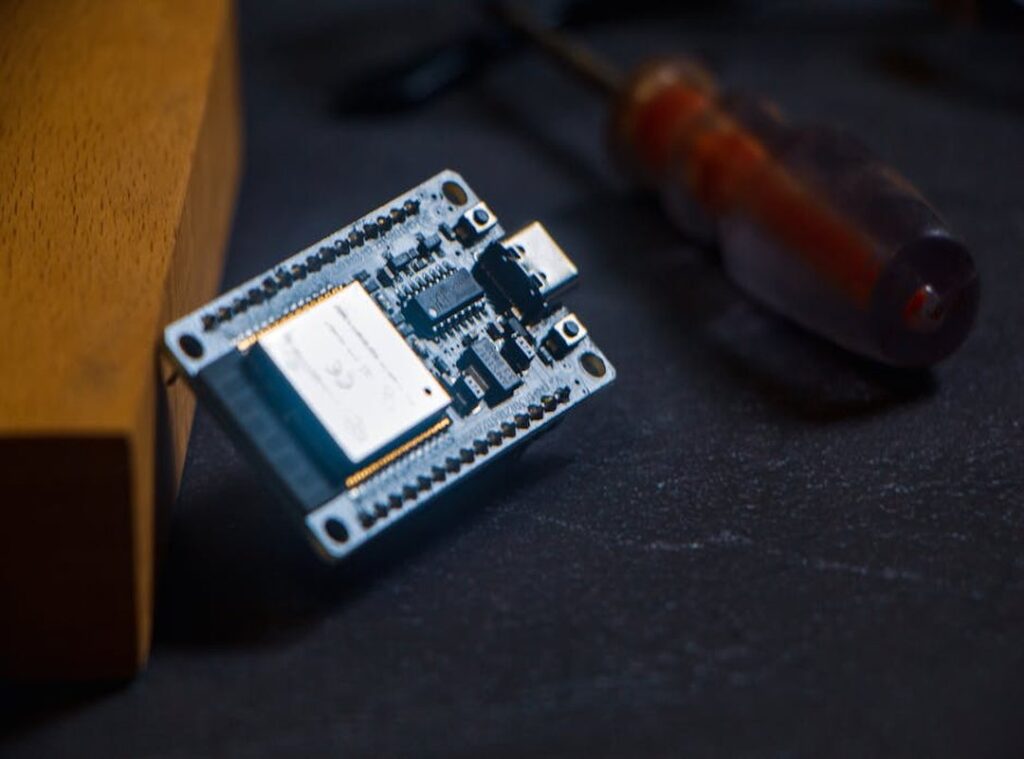
I built my first IoT app using a $12 microcontroller and a coffee-stained wiring diagram. It crashed. Then I rebuilt it.
Then I shipped something that actually worked.
You don’t need a lab or a PhD to start.
You just need to know where to plug things in (and) what happens when you do.
Are you stuck reading docs that assume you already know how MQTT differs from HTTP?
Or staring at a blinking LED like it’s supposed to mean something?
This is How to Build Iot Applications Dtrgstech. Not theory. Not buzzwords.
Just the real steps I used.
We’ll skip the jargon. No lectures on cloud architecture. No fake “beginner” tutorials that jump from “hello world” to “roll out Kubernetes.”
You’ll learn how sensors talk to servers. How data moves without getting lost. How to test fast and fail cheap.
And yes (you’ll) build something real by the end. Not a simulation. Not a demo.
A working thing that connects, sends, and responds.
You’re here because you want to make stuff. Not memorize acronyms.
So let’s go.
What an IoT App Actually Is
I’ve watched people stare at smart thermostats like they’re magic.
They’re not.
An IoT application is just a device that talks to the internet.
It senses something, sends that data somewhere, and then something reacts.
Your Fitbit counts steps (sensing). It beams that to your phone (sending). Then your app shows a graph or buzzes you (reacting).
That’s it.
The “thing” is physical (a) lightbulb, a sensor, a door lock. The internet connection moves the data. The “brain” lives in the cloud or on a server (that’s) where decisions happen.
It’s not one gadget.
It’s all three pieces working as one system.
You think your smart lights are standalone? Nope. They’re useless without the app and the cloud service behind them.
People forget that.
I built my first IoT setup with a $20 temperature sensor and a Raspberry Pi. Took me two days to get it sending data to a dashboard. It wasn’t glamorous.
It worked.
If you want to learn How to Build Iot Applications Dtrgstech, start here: How to Build Iot Applications Dtrgstech.
Don’t overthink the hardware.
Start with what you already own.
Picking Your Tools: Devices and Sensors
I started with an ESP32. It was cheap. It worked.
I broke it twice.
Microcontrollers like Arduino or ESP32 run one program at a time. They’re good for blinking LEDs or reading a sensor. (They don’t multitask.
Don’t ask them to.)
Single-board computers like Raspberry Pi run full operating systems. You can install Python, host a web server, stream video. But they’re overkill if you just want to log room temperature.
Sensors measure stuff. Temperature sensors read heat. Motion sensors detect movement.
Light sensors see brightness. Humidity sensors track moisture. That’s it.
No magic.
You don’t need all of them. Start with one. A DHT22 is $3.
It reads temperature and humidity. Plug it into your ESP32. Run a script.
See numbers change. Done.
Ask yourself: What am I actually trying to do? Not what’s cool. Not what fits in a demo video.
What solves a real tiny problem you care about?
If you’re new, skip the Pi for now. Skip the fancy gas sensors. Skip the cloud dashboard.
Just read a value. Print it. Understand the wiring.
How to Build Iot Applications Dtrgstech starts here (not) with architecture diagrams, but with a wire, a sensor, and a “why.”
You’ll get stuck. I did. I’m not sure why my first sensor gave garbage data for two days.
(It was a loose ground wire. Of course it was.)
How Your IoT Devices Actually Talk
I wired my first sensor to Wi-Fi and watched it crash the whole network.
Turns out I’d left the default password on the router.
Wi-Fi is the easiest way in. It’s what your phone uses. It’s what your coffee maker uses.
It’s not magic. It’s just radio waves bouncing between your device and a router.
Bluetooth? Short range. Good for your thermostat talking to your phone in the same room.
Cellular? Works far from home (but) eats batteries fast. LoRaWAN?
Built for farms and parking lots (not) your apartment.
Data doesn’t jump to the cloud. It crawls. First, your device talks to the router.
Then the router talks to your ISP. Then the ISP talks to the internet. That path.
The Wi-Fi → router → modem → internet (is) the network layer. Think of it as the road. Not the car.
Not the driver. Just the road.
Security isn’t optional.
An open Wi-Fi connection is like leaving your front door unlocked while your smart lock sends codes over it.
But it could have.)
I once ignored firmware updates for six months. Then my weather station started texting strangers. (Not really.
You don’t need LoRaWAN to start. You don’t need cellular. Start with Wi-Fi.
Lock the router. Change the password. Update the firmware.
Want real-world examples? Check How to Build Iot Applications Dtrgstech for what actually works in 2024. Not theory.
Not slides. Just what broke. And how we fixed it.
The Brain of the Operation
I’ve used AWS IoT, Azure IoT, and Adafruit IO.
They’re not all the same.
AWS and Azure are heavy. You get deep control (but) you’ll spend hours setting up permissions, certificates, and rules engines. Adafruit IO?
You paste an API key and your sensor starts talking. No server config. No TLS headaches.
(It’s fine until you need ten thousand devices.)
A cloud platform is where your device sends data. And where you send commands back. That’s it.
Not magic. Just pipes and storage.
Your temperature sensor doesn’t store data. It pushes it somewhere. That “somewhere” is the cloud platform.
Some platforms keep raw data for days. Others delete it after an hour unless you pay more.
Data processing means: if humidity hits 80%, turn on the fan. AWS does that with Lambda. Adafruit uses simple triggers.
One is flexible. The other works now.
Dashboards let you watch live sensor feeds or click a button to toggle a light.
You don’t need custom code for basic ones. Unless you want your boss to see it in PowerPoint.
You’re not building Netflix. You’re turning on a pump when soil dries out. So ask yourself: do I need enterprise-grade logging (or) just a graph that updates every 30 seconds?
How to Build Iot Applications Dtrgstech starts here: pick the tool that matches what you actually need. Not what sounds impressive on a datasheet.
Room Temp Monitor: Your First Real IoT Win
I built one in an afternoon.
You can too.
Grab a $5 temperature sensor and any microcontroller you own. Wire them up. Flash some code that reads the sensor.
Send those numbers to a free cloud service. Watch them live on a dashboard.
That’s it. No magic. No PhD required.
This isn’t about perfection.
It’s about seeing your code talk to your hardware and your data show up online.
Stuck? Google your exact hardware combo. Tutorials exist for every step.
Start small. Ship something real. Then tweak it.
Break it. Fix it.
That’s how you actually learn How to Build Iot Applications Dtrgstech.
Want more real-world examples like this? Check out Dtrgstech Technology Updates by Digitalrgs
Your First Smart Thing Starts Now
I built my first IoT project with a $12 sensor and bad code. You don’t need permission. You don’t need perfect gear.
You already know enough to start. That itch you feel? The one where your coffee maker should talk to your alarm?
That’s your pain point.
How to Build Iot Applications Dtrgstech is not a theory. It’s your next 90 minutes.
So pick one thing. One tiny thing. Wire it.
Break it. Fix it.
What’s stopping you right now?
Go build it.
 Senior Content Strategist
Uryxara Holt plays a key role in shaping the voice and structure of DTRGS Tech Facts. As a Senior Content Strategist, she ensures that every topic—from innovative gadgets to future predictions—is presented in a clear and engaging way. Her work focuses on aligning content with audience interests while maintaining a strong editorial identity. Uryxara has a talent for transforming complex ideas into compelling narratives that resonate with readers. She collaborates closely with the editorial team to plan, develop, and refine content strategies. Her attention to detail and creative direction help maintain consistency across the platform. Through her work, she ensures the content remains both informative and impactful.
Senior Content Strategist
Uryxara Holt plays a key role in shaping the voice and structure of DTRGS Tech Facts. As a Senior Content Strategist, she ensures that every topic—from innovative gadgets to future predictions—is presented in a clear and engaging way. Her work focuses on aligning content with audience interests while maintaining a strong editorial identity. Uryxara has a talent for transforming complex ideas into compelling narratives that resonate with readers. She collaborates closely with the editorial team to plan, develop, and refine content strategies. Her attention to detail and creative direction help maintain consistency across the platform. Through her work, she ensures the content remains both informative and impactful.