I need to tell you something that might sting a little.
Your digital skills probably aren’t as sharp as you think they are.
I see this all the time. Smart people who can navigate social media and send emails think they’re digitally fluent. Then they hit a wall in their career and can’t figure out why.
The gap between basic digital literacy and actual essential digital skills is wider than most people realize. And it’s costing you opportunities.
Here’s what this article does: it cuts through the confusion about which digital skills actually matter right now. Not the ones that sound impressive on LinkedIn. The ones that move your career forward.
I’ve analyzed the data on what separates people who thrive in tech-driven workplaces from those who just get by. The patterns are clear.
You’ll learn which skills are non-negotiable in 2024 and which ones are overrated. I’ll also give you a practical framework for building these skills without going back to school or spending thousands on courses.
No fluff about “staying relevant” or “future-proofing your career.”
Just the skills that matter and how to get them.
Redefining Digital Literacy: Beyond Typing and Browsing
I remember teaching my neighbor how to use email back in 2008.
She was thrilled when she could finally attach a photo and hit send. Back then, we called that digital literacy.
Now? That’s just the starting line.
The definition has shifted. It’s not about knowing where the power button is anymore. It’s about what I call digital fluency (the ability to use technology to actually solve problems, not just consume content).
Here’s what what are essential digital skills dtrgstechfacts really means today.
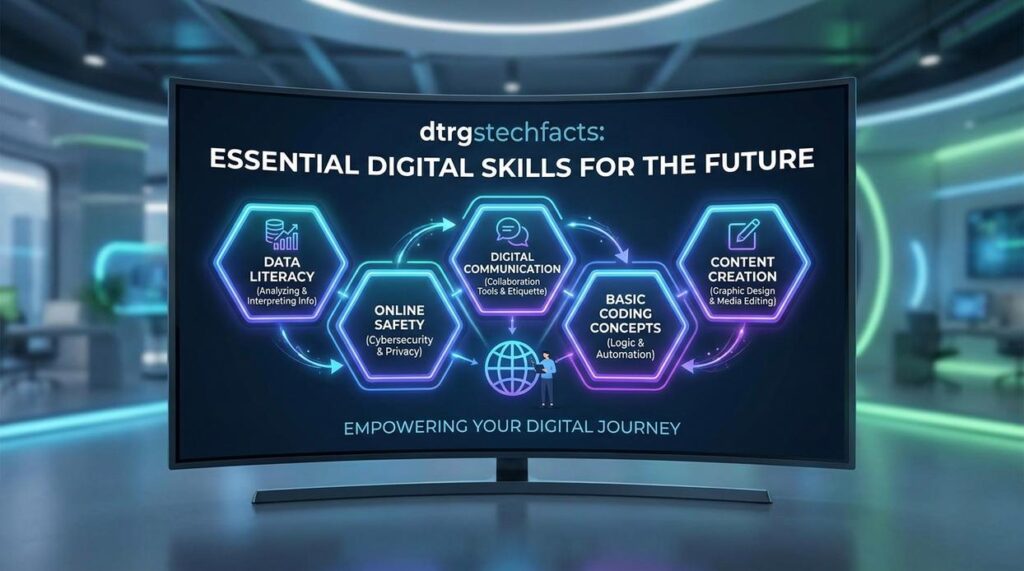
Three things matter most.
First, communication. You need to know how to share ideas across platforms and understand context. A Slack message hits different than an email.
Second, data interpretation. We’re drowning in numbers and charts. Can you look at a spreadsheet and spot what actually matters?
Third, security. Because one bad click can cost you everything.
Some people say digital skills are like learning to ride a bike. Once you know it, you’re set.
They’re wrong.
This isn’t a one-and-done thing. Technology shifts every few months. What works today might be obsolete next year. I’ve had to relearn my workflow at least three times in the past five years alone.
Digital literacy is a forever skill. You’re signing up for continuous learning, not a weekend course.
The good news? Once you accept that, it gets easier. You stop looking for the final answer and start getting comfortable with change.
The Foundational Tier: Non-Negotiable Skills for Every Professional
Let me be clear about something.
When I started working remotely back in 2018, I thought I had digital skills figured out. I could send emails and use Google Docs. That was enough, right?
Wrong.
Within two weeks, I was drowning. My team used Slack for everything and I kept missing messages. I didn’t know basic video call etiquette (yes, I was that person who forgot to mute). And don’t even get me started on how I managed shared files.
Some people argue that these tools are just distractions. They say we should go back to simpler times with phone calls and in-person meetings. That face-to-face communication is what really matters.
And sure, there’s value in that thinking.
But here’s what they’re missing. The workplace changed. Whether you like it or not, what are essential digital skills dtrgstechfacts has become a real question that determines who gets hired and who gets left behind.
You need more than email now.
Mastering digital communication means knowing when to use Slack versus Teams versus email. It means understanding that a quick video call beats twenty messages back and forth. I learned this the hard way after spending an entire afternoon in a text-based argument that a five-minute conversation would’ve solved.
Then there’s security.
I got phished once in 2020. Clicked a link that looked legitimate and nearly compromised my entire company’s network. That was my wake-up call. Now I use a password manager and enable 2FA on everything. Not because I’m paranoid, but because I’ve seen what happens when you’re not careful.
Information literacy is the part most people skip. But it matters more than ever. Can you tell the difference between a credible source and someone making stuff up? Can you look at a spreadsheet and actually understand what the numbers mean?
These aren’t optional anymore. They’re the baseline for how to maximize efficiency dtrgstechfacts in any professional setting.
You either learn them or you fall behind.
The Accelerator Tier: Skills That Drive Promotion and Opportunity

You know that feeling when you walk into a meeting and someone pulls up a dashboard you’ve never seen before?
Your palms get a little sweaty. You nod along but you’re basically guessing what half the interface means.
I’ve been there. And I can tell you it’s not a great place to be when you’re trying to move up.
Some people will tell you that soft skills are all that matter. That if you’re good with people and work hard, the technical stuff will sort itself out. They’ll say focusing on tools and platforms is missing the bigger picture.
Here’s where I disagree.
Those soft skills matter, sure. But when two people are up for the same promotion and one can actually navigate the systems your company runs on? That person wins every time.
What are essential digital skills dtrgstechfacts? The ones that make you feel the difference between fumbling through your workday and actually controlling it.
Cloud Computing & SaaS Fluency
Picture this. You’re staring at your screen and three different browser tabs are open. Salesforce on one. Google Workspace on another. Some project tracker you barely understand on the third.
This is what work looks like now. Everything lives in the cloud and you need to move between these platforms without breaking stride.
I’m not saying you need to become a developer. But you should understand how these tools connect. How data flows from your CRM into your reporting dashboard. Why your team uses Slack instead of email for certain conversations.
When you get how to buy and sell online dtrgstechfacts, you start seeing patterns. Most SaaS platforms work the same way once you understand the logic.
Digital Content Creation Basics
You don’t need to be a designer. But you do need to make things that don’t look like garbage.
I mean the kind of presentation where people actually look at the screen instead of their phones. The quick video edit that gets your point across in 30 seconds instead of a rambling email.
Tools like Canva changed everything here. You can hear the difference in a room when you show up with clean visuals versus a wall of text on a slide. People lean in. They ask questions.
It’s not about being creative. It’s about being clear in whatever format the moment demands.
Project Management Software Proficiency
Open Asana or Jira for the first time and it feels like you’re looking at mission control.
Cards everywhere. Timelines. Dependencies. Sprints. Whatever those are.
But once you get it? You can see your entire workflow laid out like a map. You know exactly what’s blocking you and what you can tackle next.
Managers notice when you can update a board without asking for help. When you understand why tasks are organized a certain way. It shows you think in systems, not just individual to-do items.
The click of moving a card from “In Progress” to “Done” might seem small. But do that consistently across projects and you become the person who actually ships things.
These skills aren’t flashy. Nobody’s going to applaud you for knowing your way around a cloud platform.
But they create this quiet confidence. You walk into any situation and know you can figure out the tools in front of you.
That’s what opens doors.
The Future-Proof Tier: Preparing for Tomorrow’s Workplace
I’ll be honest with you.
Most people are preparing for the wrong future.
They think tomorrow’s workplace will look like today’s but with fancier tools. They’re wrong.
The skills that got you hired five years ago? They won’t cut it in five more. And I’m not talking about learning to code or getting another degree.
I’m talking about something different.
AI Literacy Isn’t Optional Anymore
You need to know how to work with AI. Not program it. Just use it.
I use generative AI every day. It summarizes long documents I don’t have time to read. It helps me brainstorm when I’m stuck. It drafts emails that would take me twenty minutes in about thirty seconds.
But here’s what most people get wrong. They either treat AI like magic or avoid it completely. Both approaches will leave you behind.
You need to understand what these tools can actually do. More importantly, you need to know what they can’t do. (They’re terrible at nuance and they make stuff up when they don’t know something.)
The ethical piece matters too. When you’re using AI at work, you’re feeding it data. Sometimes sensitive data. You need to think about that.
No-Code Platforms Are Changing Who Builds Things
This one surprises people.
You don’t need to be a developer anymore to build real solutions. No-code and low-code platforms let regular people create apps and automate workflows without writing a single line of traditional code.
I’ve seen marketing folks build customer databases. HR teams automate onboarding processes. Sales reps create tracking systems that actually work.
These platforms are what are essential digital skills dtrgstechfacts because they shift power. You can solve your own problems now instead of waiting months for IT to maybe help you.
Data Privacy Matters More Than You Think
Everyone talks about data privacy. Few people actually get it.
It’s not just about following rules. It’s about understanding why those rules exist in the first place.
When you handle customer information or employee records, you’re holding someone’s trust. Mess that up and you don’t just break compliance. You break something bigger.
The workplace of tomorrow will run on data. The people who understand how to protect it while still using it? They’ll be the ones who thrive.
Your Lifelong Journey in Digital Mastery
We’ve broken down the tiered system of digital skills you need.
From foundational necessities to career accelerators that future-proof your work. You now see where each skill fits and why it matters.
The gap between what you think you know and what you actually know is real. It holds you back more than you realize.
Closing this gap isn’t a one-time thing. It requires continuous learning that starts with the basics and builds up from there.
Here’s your challenge: Take an honest look at your skills against this list. Pick one area where you’re weak.
Spend this month getting better at it. Not perfect, just better.
The digital world keeps moving forward. Your skills need to move with it.
What are essential digital skills dtrgstechfacts gives you the roadmap. You just need to take the first step.
 Founder & Chief Technology Editor